Plumbing & heating Ottawa
Plumbing and Heating in Ottawa
Leaking radiator connections, cold rooms and boiler-related pipework need the right diagnosis. Use this guide to understand the water side of home heating, then tell Plumber Ottawa about your system. Confirm the required service and qualified trade when booking; gas, combustion and electrical work are separate from ordinary plumbing.
- Radiator and heating-pipe enquiries
- Water leaks versus heating faults
- Repair and replacement considerations
- Clear boundaries for specialist work
Get a fast plumbing quote
Tell us what's wrong — we'll call you back in minutes.
- Licensed & insured
- Upfront flat-rate pricing
- Workmanship guarantee
- Clean, respectful techs
- Same-day service
Quick answer
What does plumbing and heating mean in an Ottawa home?
Plumbing and heating overlap when a home uses water to distribute heat through radiators, baseboards or in-floor loops. That water-side pipework is called hydronic heating. A boiler provides heat, while pumps, valves and controls manage circulation. Domestic hot water for taps is a separate function, although some appliances support both. Describe your equipment and symptoms before booking, and confirm whether you need a plumber, a heating specialist, a qualified gas technician or an electrician.
What we fix
Start with the symptom, not a guessed replacement part
A cold radiator does not automatically mean the boiler has failed. A leak near a boiler does not automatically mean the appliance needs replacing. The location, timing and affected rooms help define the next assessment.
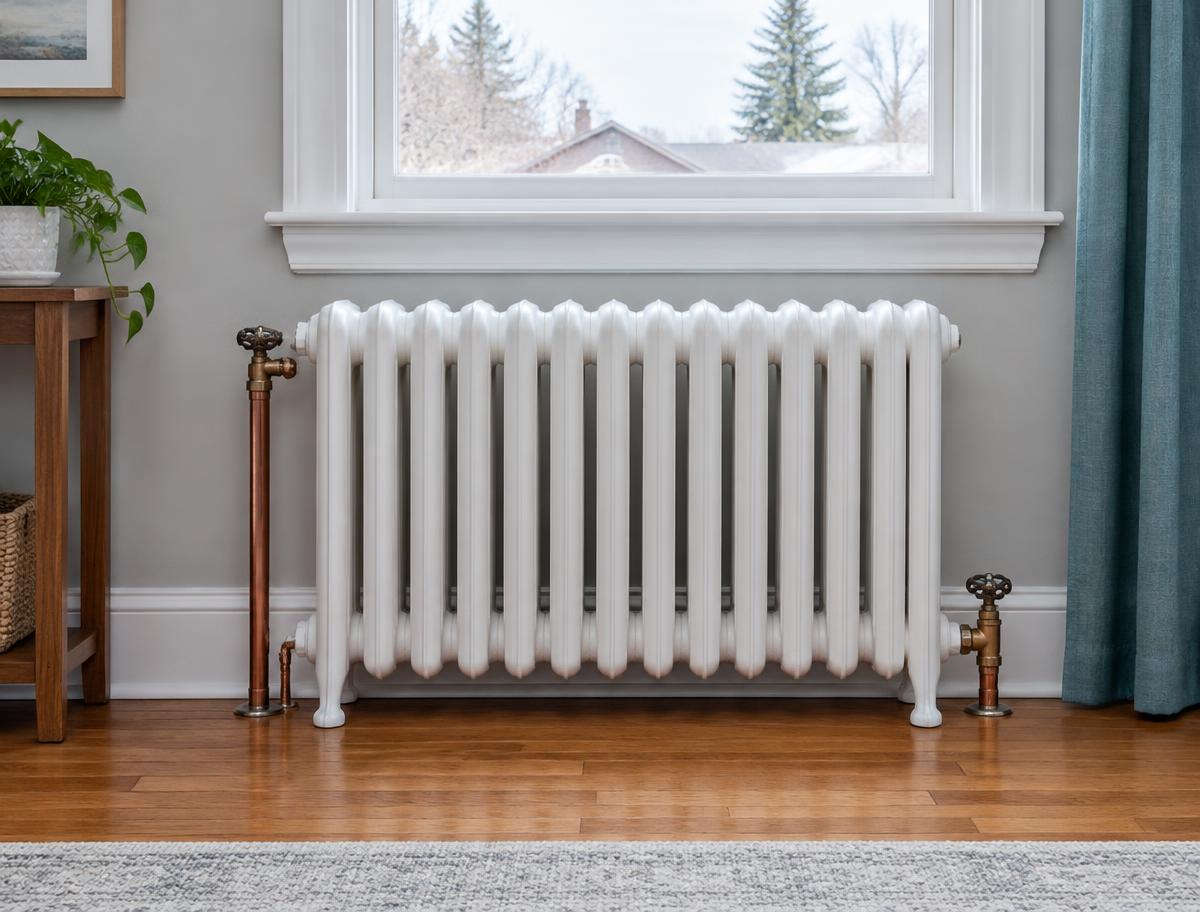
Leaking radiator connections
Moisture at a valve, union or pipe can damage flooring and finishes. Note the first wet location and whether the leak changes when the heating runs. Do not force an old valve or tighten hot fittings while the system is operating.
One room stays cold
A single cold emitter can involve its valve, air, circulation or the room's heat demand. Tell us whether the radiator is entirely cold, partly warm or noisy, and whether neighbouring rooms receive heat normally.
Several zones lose heat
A wider heating problem may involve controls, circulation, power or the heat source. Record which zones are affected and any displayed fault code. Avoid assuming a plumbing repair alone will restore every system.
Heating-system pressure changes
Pressure readings need interpreting against the system design and manufacturer instructions. Repeated topping-up, visible leaks or discharge from a relief pipe warrant assessment. Never cap a relief outlet or bypass a safety device.
Noise in heating pipework
Gurgling, knocking and vibration have different possible causes. Describe when the sound occurs: at startup, during circulation or as pipes cool. Air removal, support, expansion and pump operation require different checks.
Heating versus hot-water faults
If taps lack hot water but rooms heat normally, the domestic hot-water side may be affected. If both fail, report both. Appliance labels and a description of the connected equipment help identify the appropriate trade.
Compare your options
Which professional should assess your heating problem?
The boundaries depend on the equipment and the proposed work. Ask the contractor to confirm qualifications and the actual service scope before arranging a visit. This page does not establish that every specialist service is offered by Plumber Ottawa.
| Concern | Likely assessment focus | Important boundary |
|---|---|---|
| Leak at a heating pipe or radiator valve | Water-side pipework and connection condition | Confirm hydronic experience and safe system isolation |
| Cold radiator or uneven room heating | Emitter, valves, circulation and control response | System design and heat demand may need specialist review |
| Gas boiler ignition or combustion fault | Fuel-fired appliance and venting | Appropriately qualified gas technician required |
| Pump wiring or electrical supply fault | Electrical connections and control circuits | Electrical work needs the applicable qualified trade |
| No hot water at taps | Domestic water heater or combined-appliance function | Identify whether the appliance also heats the home |
| Gas smell or carbon monoxide alarm | Immediate life-safety response | Leave the building; seek emergency help from outside |
How it works
How to arrange a useful plumbing and heating assessment
- 1
Identify the system
Provide the equipment model, fuel if known, and whether your home has radiators, baseboards or in-floor heating.
- 2
Describe the fault
Explain which rooms are affected, where water appears and when the problem began. Mention any recent work.
- 3
Confirm the trade
Ask whether the requested work is within the available service scope and who handles gas or electrical tasks.
- 4
Compare the proposal
Clarify diagnostic charges, parts, access work, isolation, refilling and any separate contractor requirements.
- 5
Record the outcome
Keep the findings, installed parts and remaining recommendations with your appliance and property records.
Upfront pricing
What affects plumbing and heating repair costs in Ottawa?
The price depends on the failed component, access, system layout and the trade required. An accessible radiator connection is a different scope from concealed in-floor pipework or a fuel-fired appliance fault. There are no verified standard heating-repair rates or guaranteed installation prices on this page. Request a quote for the actual equipment and symptoms.
A water-side repair may require cooling, isolation, draining part of the system, replacing a fitting and restoring operation. Ask whether the quote includes those tasks and any checks needed after refilling. If a system contains an approved treatment fluid, its specification matters; adding unknown chemicals or ordinary automotive antifreeze is not an appropriate substitute.
For larger work, compare like-for-like proposals. Identify the equipment, controls, connections, disposal, applicable taxes and any access or restoration excluded from the estimate. Clarify which contractor is responsible for fuel, venting and electrical work. Do not compare a small plumbing repair quote with a complete boiler replacement as if they solve the same problem.
- Identify equipment and connected zones
- Separate pipe repairs from appliance servicing
- Confirm the required qualifications
- Clarify diagnostic and visit charges
- Include isolation and recommissioning scope
- Ask about access, restoration and taxes
Not sure whether you need plumbing or heating help?
Describe the system and symptoms so the service scope and next step can be confirmed before booking.
Local Ottawa plumbers
Plumbing and heating enquiries across Ottawa
We receive plumbing enquiries from Ottawa, Kanata, Orléans, Barrhaven, Nepean, Stittsville and Vanier. A neighbourhood name is useful for arranging access, but it cannot identify your heating system. Homes on the same street can use completely different equipment, and renovations may have changed original radiators or added separate heating zones.
For a property in the Glebe, Sandy Hill, Centretown or New Edinburgh, explain any additions and whether older emitters connect to a newer heat source. For a Kanata or Barrhaven home, mention basement finishing or a recently added bathroom if that work is relevant to the fault. In a rural property, describe any private-well or treatment equipment only if it connects to the problem; a small travel fee may apply.
In Orléans and Vanier, French-language service is available. Landlords can request written job reports. Condo residents should contact management about shared heating systems, building isolation and access rules before authorizing changes. If the problem affects several units, a building-level assessment may be needed rather than a repair confined to your own radiator.
Hydronic heating guide
Understand the water side of your Ottawa heating system
This guide helps you report symptoms and compare proposals. It is not a procedure for servicing boilers, altering pressure settings or working on hot, pressurized equipment. Consult the equipment instructions and the appropriate qualified professional.
Hydronic heat is different from forced-air heating
A hydronic system carries heat through water-filled pipes to emitters such as radiators, baseboards or floor loops. A forced-air system distributes warmed air through ducts. Both may use thermostats, but their circulation, controls and repair needs differ. Knowing which type you have prevents a request for heating help from becoming a visit by the wrong trade.
Describe the heat source and emitters rather than relying on the word furnace for every appliance. A photo of the model label and surrounding connections is helpful when taken without removing covers. Do not touch hot components or open an appliance enclosure to obtain information. If you cannot identify the equipment safely, say that when requesting an assessment.
Boiler heating and domestic hot water are not the same job
A boiler commonly heats water used to warm rooms. Domestic hot water is the water supplied to taps, showers and appliances. Some homes have separate equipment for these functions; others use a combined appliance or a connected storage arrangement. Losing one function does not prove the other must have failed too.
Tell the contractor whether room heating, hot water at taps or both have stopped. Mention whether the fault occurs everywhere or at one fixture only. A shower that alone delivers lukewarm water may need a mixing-valve assessment rather than boiler work. Accurate symptoms help avoid replacing equipment before the affected circuit or fixture has been identified.
One cold radiator versus a whole-house heating fault
When one radiator stays cold while others warm up, the assessment usually starts with the local emitter, valves and its place in the circuit. When every zone is cold, the heat source, circulation, controls or power become more relevant. These are diagnostic directions, not proof that any particular component needs replacement.
Record which rooms are affected and whether the fault changes after the thermostat calls for heat. Note if the system previously worked normally or if the room has always been uncomfortable. Changes to insulation, windows or room layout can affect comfort without creating a plumbing fault. A persistent uneven-heating problem may need design review as well as mechanical checks.
Air, circulation and balancing need system-specific checks
Air in a hydronic circuit can interfere with circulation and cause noise, but not every cold spot is an air problem. A restricted valve, circulation issue or unsuitable operating condition may produce similar symptoms. The system configuration determines how air is removed and how pressure is restored; a generic online instruction may not fit your installation.
Do not open vents on hot or pressurized equipment without the correct instructions and competence. Incorrect bleeding or refilling can introduce further problems. Ask what evidence supports the diagnosis and whether the proposed repair addresses the cause of recurring air. Repeatedly treating a symptom without checking leaks or the system's control components can leave the underlying fault unresolved.
A leaking radiator valve needs more than a guessed tightening
Radiator connections may leak at valve packing, a union, a threaded joint or the emitter itself. The first point of fresh moisture is more useful than the final puddle location. If safe, photograph the visible leak from a distance and protect the surrounding area without touching hot pipes or disturbing fragile fittings.
A repair may require the affected circuit to cool and be isolated before work can proceed. Ask whether the existing valves permit local isolation or whether a larger part of the system must be drained. A corroded emitter or inaccessible connection can change the scope. Tightening old fittings forcefully can worsen damage and is not a reliable substitute for diagnosis.
Pressure readings and relief discharge require caution
Hydronic pressure varies with system design and operating temperature. An isolated gauge reading cannot safely be interpreted using a universal number from another home. Record the reading and whether the equipment was cold or operating, then provide that information to the qualified professional. Use the manufacturer's instructions for the applicable operating guidance.
Repeated water addition, a noticeable pressure change or water coming from a relief discharge deserves investigation. Never cap the discharge, bypass a control or adjust safety components to stop an inconvenient symptom. Adding water repeatedly can mask a leak. The assessment should establish why water or pressure is being lost before treating topping-up as routine maintenance.
Circulation pumps and zone controls cross trade boundaries
A heating system may use pumps and motorized zone valves to send water where heat is needed. A room thermostat, control fault or failed actuator can resemble a pipework problem. Because these components combine mechanical and electrical functions, the required work depends on the fault and the qualifications needed to address it.
Provide any visible fault code exactly as displayed and describe recent power interruptions or control changes. Do not bridge terminals, bypass interlocks or disconnect wiring to test a theory. Ask who will diagnose the control side and whether a separate qualified contractor is needed. Ordinary plumbing experience does not automatically establish authority to perform every heating or electrical task.
Gas, combustion and carbon monoxide are safety matters
Work on gas-fired equipment, combustion and venting requires the applicable qualified professional. A boiler water leak and a burner fault can occur in the same area but are not interchangeable jobs. Confirm the technician's qualification and the contractor's suitability for the specific appliance; this page does not promise gas-appliance service or establish those credentials for Plumber Ottawa.
If you smell gas, suspect carbon monoxide or hear a carbon monoxide alarm, leave the building and obtain emergency assistance from outside. Do not stay indoors to investigate or operate equipment as a test. Follow the emergency service or gas supplier's instructions. A website quote request is not an emergency reporting channel for a suspected fuel leak or carbon monoxide hazard.
In-floor heating and concealed pipework
Water-based in-floor heating uses loops connected to a distribution arrangement, while electric floor heating uses a different system entirely. Confirm the type before requesting a plumbing repair. A cold floor alone does not reveal whether the issue is a thermostat, circulation, floor covering, control setting or concealed pipe fault.
Share installation drawings, renovation records and the location of accessible manifolds if available. Do not drill into a floor or wall to search for pipework. Where concealed damage is suspected, ask how the assessment will limit unnecessary opening and whether surface restoration is included. Access and documentation often matter as much as the apparent size of the problem.
Repair versus a new heating installation
A local water-side fault does not necessarily justify replacing the whole heating system. Conversely, repeated failures or an unsuitable layout may make repeated spot repairs poor value. Compare the specific failed part, condition of connected components, availability of service parts and remaining limitations before choosing a repair or a larger project.
For a replacement proposal, ask how capacity, distribution, controls and compatibility were assessed. Do not choose new equipment using floor area alone or copy a neighbour's installation. Fuel, venting, electrical connections and any required approvals need their own scope. This guide offers questions to ask; it does not provide a verified equipment recommendation or promise an installation service.
Plan before Ottawa's heating season
Address known leaks and recurring heating problems before the system becomes essential for winter comfort. Review equipment instructions, keep access clear and arrange any appropriate maintenance with a qualified provider. This is a planning principle, not a guaranteed appointment timeline or a claim about a particular property's condition.
If you travel or manage a vacant property, discuss temperature monitoring and loss-of-heat planning with the appropriate professional. A water-filled heating circuit and domestic water piping have different isolation needs. Do not assume turning off one valve protects every circuit. For suspected frozen domestic plumbing, use our separate frozen-pipe page and report the affected fixture or pipe location.
Prepare for an assessment and retain the findings
Before the visit, clear safe access to the equipment, identify any building-management requirements and gather model information and previous invoices. List the affected rooms and describe leaks, sounds and fault messages. Do not open appliance covers or force valves in preparation. A short record of symptoms is more useful than a guessed list of replacement parts.
After assessment, ask what caused the problem, what work was completed and whether another trade or further investigation is required. Keep the report, installed-part details and any applicable warranty terms with your property records. Landlords can request written job reports. Where the service cannot cover the required specialist work, obtain that confirmation before assuming your enquiry is a booked repair.
Explore our Ottawa plumbing network
Plumbing services
- Emergency Plumber Ottawa
- Weekend & Same-Day Plumber
- Plumbing Repairs Ottawa
- Pipe Repair & Replacement Ottawa
- Faucet Repair & Installation Ottawa
- Water Leak Detection Ottawa
- Toilet & Bathroom Fixture Repair
- Kitchen Plumbing & Dishwashers
- Drain Cleaning Ottawa
- Sewer Line Repair Ottawa
- Water Heater Repair Ottawa
- Tankless Water Heater Ottawa
- Frozen Pipe Repair Ottawa
- Sump Pump Installation Ottawa
- Backwater Valve Installation Ottawa
- Residential Plumber Ottawa
- Commercial Plumber Ottawa
- Plumbing Inspection Ottawa
- Water Softeners & Filtration Ottawa
- Ottawa Plumber Rates & Costs
- Plombier Ottawa (français)
- All Plumbing Services
FAQ
Plumbing and heating questions for Ottawa homeowners
Straight answers from our licensed plumbers. Still have a question? Call us — real people answer.
Contact us
Tell us about your plumbing and heating enquiry
Send the details and a licensed plumber will call you back with honest advice and a clear, upfront price. For active leaks or no water, call us right away.

Request service or a free quote
Average callback time: under 15 minutes during business hours.