Pipe repair Ottawa
Pipe Repair in Ottawa — Leaks & Pipe Replacement
A wet ceiling, leaking connection or recurring pipe failure needs a diagnosis before a replacement decision. Tell Plumber Ottawa where water appears and which fixtures are affected. Explore repair options for household supply and drain pipes, including copper, PEX and older materials, then request an assessment of your property.
- Leaking supply and drain pipe enquiries
- Copper and PEX repair considerations
- Targeted repairs versus planned repiping
- Access and restoration questions answered
Get a fast plumbing quote
Tell us what's wrong — we'll call you back in minutes.
- Licensed & insured
- Upfront flat-rate pricing
- Workmanship guarantee
- Clean, respectful techs
- Same-day service
Quick answer
Should a leaking pipe be repaired or replaced?
An isolated leak in otherwise sound pipework may need a targeted repair. Repeated failures, widespread deterioration or an unsuitable material can justify replacing a longer run. The decision depends on the pipe’s condition, cause of failure, accessibility and compatible repair options—not its age or colour alone. For active leakage, stop using affected fixtures and isolate the water only if the valve is safely accessible. Request an assessment before assuming the whole home needs repiping.
What we fix
Which pipe problem are you seeing?
The place where water collects is not always the point where it escapes. Describe the first visible moisture, when it occurs and whether the leak continues with taps turned off. These observations help distinguish supply, drainage and non-plumbing causes.
A pressurized supply leak
Water may escape even when no fixture is being used. A pipe, joint, valve or flexible connector can be involved. If safe, isolate the affected supply; do not enter standing water near electrical equipment or force a seized valve.
A leak when water drains
Moisture appearing after a sink, bath or shower empties may involve a drain connection, fixture seal or nearby waterproofing. Stop using the affected fixture and record which action produces the leak rather than repeatedly testing it.
A stained ceiling or wall
A concealed leak may travel along framing before becoming visible. Record the room above, recent fixture use and any changes after rainfall. Avoid cutting blindly into a wall or ceiling that could conceal wiring and other services.
Repeated copper pinholes
A history of leaks helps determine whether another small repair is sensible. Keep dates, locations and previous invoices. The cause needs assessing; a pinhole alone does not establish a citywide water-quality problem or prove every copper pipe is defective.
Weak flow or noisy pipework
Reduced flow and banging have several possible causes, including fixture restrictions, valves, pressure conditions and pipe support. A new pipe is not automatically the answer. Describe whether the symptom affects one fixture, one floor or the whole house.
An unidentified older material
Pipe markings, fittings and renovation records help identify existing materials. Do not diagnose lead, polybutylene or a composite product from colour alone. Ask for documented identification before considering replacement or making an insurance decision.
Compare your options
Compare pipe materials and repair decisions
Supply pipes carry water to fixtures; drain pipes carry wastewater away. They require different materials, connections and checks. This overview supports a discussion with a qualified plumber, not a recommendation to join materials yourself.
| Material or system | What the assessment considers | What to clarify before work |
|---|---|---|
| Copper water supply | Local leak, joint condition and history of failures | Repair length, neighbouring pipe condition and connection method |
| PEX water supply | Product markings, fittings, support and installation conditions | Compatibility with the specific tubing and fitting system |
| Galvanized steel supply | Corrosion, restrictions and condition of remaining runs | Whether a local repair leaves other deteriorated sections in service |
| Suspected lead plumbing | Confirmed material and drinking-water exposure concerns | Appropriate testing advice and full replacement scope |
| ABS, PVC or cast-iron drainage | Leak location, joint integrity, support and drainage behaviour | Permitted transition fittings, access and any shared building drain |
| Unidentified composite or plastic supply | Manufacturer markings and actual product identity | Suitable repair components and any insurer documentation requested |
How it works
Plan a pipe repair without guessing the scope
- 1
Report the symptoms
Share your Ottawa location, first wet area, affected fixtures and whether water continues escaping when fixtures are off.
- 2
Confirm the assessment
Ask about visit availability, diagnostic charges and how the suspected supply or drain fault will be investigated.
- 3
Compare repair options
Discuss a local repair, longer replacement run or further investigation, with the reason for each option explained.
- 4
Clarify access and testing
Confirm isolation, wall or ceiling opening, applicable approvals and checks before the repaired area is concealed.
- 5
Keep the repair record
Retain the location, installed materials, findings and any remaining recommendations with your property documents.
Upfront pricing
How much does pipe repair cost in Ottawa?
Pipe repair costs depend on access, material, isolation requirements and the extent of damage. Replacing an exposed fitting in an unfinished basement is a different project from tracing a leak behind tiled walls. No verified standard pipe-repair prices are published on this page. Ask for the diagnostic charge and a quote based on your actual pipework rather than treating an online average as a booked price.
Separate the plumbing repair from restoring damaged finishes. A proposal may cover opening a small area and replacing pipe without including drywall, paint, tile, insulation or water-damage drying. Clarify those boundaries before approving the work. If more damage is discovered after access is opened, ask how any change to the proposed scope and price will be agreed.
For planned repiping, compare the same rooms, pipe runs and deliverables. Ask whether the proposal includes new isolation valves, fixture reconnections, testing, disposal, permits where applicable and taxes. In condos or multi-unit buildings, coordinated shut-offs and access arrangements can affect the project. A possible small travel fee applies to rural addresses; confirm any visit charges when booking.
- Location and extent of the failed pipe
- Exposed versus concealed access
- Compatible materials and fittings
- Water isolation and fixture reconnection
- Testing and applicable approvals
- Separate finish restoration and drying
Tell us about the leak before choosing a repair
Share the affected room, visible symptoms and your location. Ask about availability and the assessment scope before booking.
Local Ottawa plumbers
Pipe repair enquiries across Ottawa neighbourhoods
We receive pipe repair enquiries from Ottawa, Nepean, Kanata, Barrhaven, Orléans, Stittsville and Vanier. An address helps plan the visit, but a neighbourhood cannot identify a home’s plumbing material. Original pipework may coexist with several generations of renovations. Describe what is visible in your basement or utility room and share previous repair records if available.
For homes in the Glebe, Centretown, Sandy Hill or New Edinburgh, mention additions, converted bathrooms and concealed access. For properties near Hazeldean Road, Strandherd Drive, Innes Road or Montreal Road, the street is useful for location—not evidence of a particular pipe defect. Finished basements, attached garages and shared walls can change access regardless of the property’s age.
French-language service is available in Orléans and Vanier, and landlords can request written job reports. Condo owners should confirm management rules for shared risers and shut-offs before authorizing changes. At rural properties, explain whether water comes from a private well and whether pumps or treatment equipment are involved. The source of low flow or leakage may extend beyond the pipe beside the symptom.
Ottawa pipe repair guide
Understand a leak, compare materials and plan the right repair
Use these questions to describe a problem and compare a contractor’s proposal. They are not instructions for cutting, soldering or pressure-testing pipework. Active water damage, contaminated water and electrical hazards need an appropriate professional response.
First distinguish supply leaks from drainage leaks
A supply line normally carries water under pressure, so a fault can leak without anyone opening a tap. A drain typically receives water when a connected fixture is used. Those patterns are useful clues, but not conclusive tests: a shower seal, appliance hose or rainwater entry can produce moisture close to plumbing. Report what happened immediately before water appeared.
Stop using the affected fixture while seeking advice. For an active supply leak, close the relevant isolation valve only if you can reach and operate it safely. If you cannot isolate locally, a safely accessible main shut-off may be needed. Do not force a corroded valve, touch wet electrical equipment or enter an unsafe space to reach the pipe.
Why the visible stain may not locate the hidden leak
Water can travel across joists, along pipework and through ceiling openings before dripping into a room. A stain below a bathroom does not identify a failed pipe by itself. The assessment should consider the fixture connections, drain, supply, waterproofing and other plausible sources. Photos showing the wider area are often more useful than a close-up of the final puddle.
Ask which observations or tests will narrow the location before surfaces are opened. No page can guarantee leak detection without access or promise a particular instrument will solve every case. Concealed repairs may require exploratory opening. Clarify who performs that opening, what further investigation could be needed and whether the estimate includes restoring the wall or ceiling afterward.
Copper pinholes: one leak is not a whole-house diagnosis
A pinhole is a small opening, but its effect depends on pressure, location and how long it remains unnoticed. The cause can require examining the failed section and surrounding conditions. Neither a home’s age nor a single leak proves a universal copper problem. A useful assessment distinguishes a localized defect from a pattern affecting several runs.
Bring previous repair dates and locations into the discussion. Repeated leaks close together can make a longer replacement worth considering, especially while access is already open. Ask what evidence supports that recommendation and which sections remain unchanged. If there is no clear pattern, request an explanation of why repiping would solve more than the immediate failed spot.
Copper versus PEX is a compatibility decision
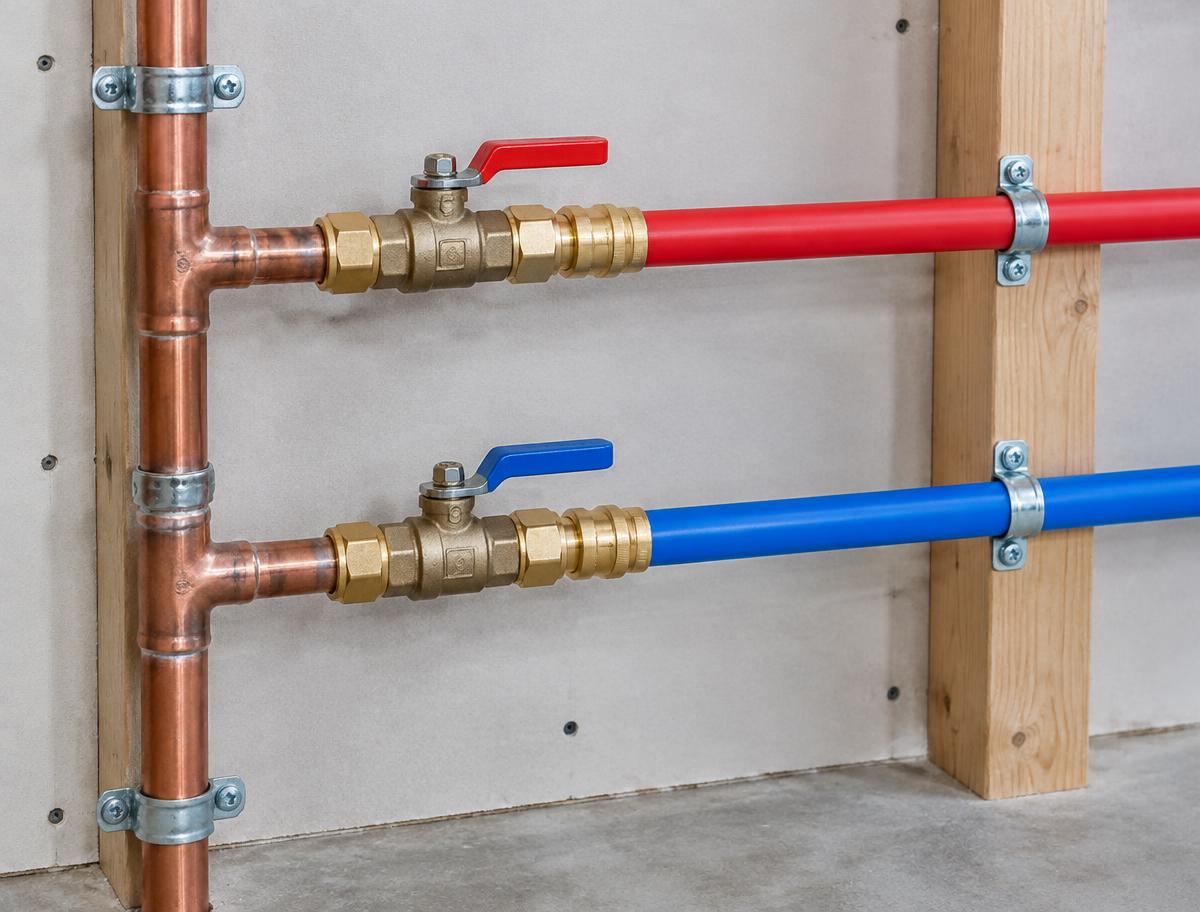
Copper and PEX can both be encountered in household water supplies, including mixed installations after renovation. Selecting a repair involves the application, existing system, approved products and manufacturer requirements. It is not simply choosing the cheaper material. Different PEX products and fitting systems are not automatically interchangeable; matching components and appropriate installation methods matter.
Ask the contractor to identify the proposed tubing and connection system, explain the transition to existing pipework and account for support and access. Do not judge an installation from red or blue colour alone. Keep product details in the repair record. Where a supplier’s warranty applies, obtain the actual terms rather than assuming every material offers the same coverage.
Older galvanized pipe and reduced water flow
Older metal supply lines can be part of a low-flow investigation, but restricted flow also occurs at aerators, valves and other components. Tell the contractor whether cold and hot water are affected equally and whether every fixture behaves the same way. That helps distinguish a local outlet restriction from a wider supply issue before replacement is proposed.
If deteriorated galvanized sections are confirmed, ask how much of the connected run remains in similar condition. Replacing one accessible fitting may not address restrictions elsewhere. At the same time, a whole-house replacement should be supported by findings rather than age alone. Compare the likely benefit, disruption and remaining limitations of a targeted repair and a staged replacement.
Lead concerns need material identification and water advice
Lead in drinking water is a health concern, not just a maintenance inconvenience. Potential sources can include plumbing components and a service line, so replacing a visible interior pipe does not automatically resolve every exposure pathway. Use Health Canada’s lead guidance and the City of Ottawa’s water-quality information when seeking appropriate testing and material-identification advice.
Do not assume a pipe is lead from a photograph or scrape an unidentified surface as a home test. Boiling water is not a method for removing lead. Where lead is suspected, ask about the complete plumbing and service-line context and suitable interim guidance from the relevant authority. A quote for one pipe repair is not proof that drinking water has been tested or certified safe.
Identify composite and older plastic plumbing properly
Some properties contain composite tubing or older plastic systems whose repair requirements differ from modern PEX. Colour, building age and a neighbour’s experience are not enough to identify a product. Accessible manufacturer markings, fitting details and installation records are better starting points. Ask for the material identification to be documented before deciding on a replacement strategy.
If your insurer has requested information, obtain its actual requirements rather than relying on a blanket online statement about coverage. Repair suitability, insurability and warranty are separate questions. A temporary leak stop may not satisfy a long-term replacement recommendation. Clarify whether the proposed work is an immediate repair, a planned upgrade or only further investigation of an unidentified system.
Drain pipe repairs are not the same as drain cleaning
A blockage limits wastewater movement; a damaged joint or cracked pipe allows it to escape. The two problems can coexist, but clearing a blockage does not necessarily repair a leaking pipe. Describe slow drainage, backups, odours and visible moisture separately. A fixture seal or trap connection may need a different response from a concealed building drain fault.
Drain materials can include plastic and cast iron, with transitions requiring appropriate connections. Ask whether the investigation concerns one fixture, a branch drain or a shared building system. Repeatedly running water to reproduce a leak can worsen damage. If wastewater is backing up or contamination is present, avoid contact and seek advice about both plumbing and any necessary cleanup.
Frozen pipes require a separate safety assessment
Loss of flow during cold weather can suggest freezing, but a closed valve or other supply problem is also possible. A frozen section can conceal damage that becomes apparent as water returns. Explain the affected fixtures and whether nearby rooms, exterior walls or unheated spaces have been unusually cold. Do not assume restored flow means the line is undamaged.
Never use an open flame or a torch to thaw a pipe. Avoid improvised electrical heating around moisture or concealed materials. Use our frozen-pipe guide for further context and request professional advice on isolation and assessment. The longer-term plan should consider why the pipe was vulnerable; replacing a split section without addressing the exposure may leave the same winter risk.
Targeted repairs, staged replacement and full repiping
A targeted repair addresses a defined failed section. A staged replacement renews selected runs, often when access is already available during renovation. Full repiping is a larger project involving multiple fixture supplies and reconnections. Compare these options against documented condition, repeat failures and your renovation plans, not a universal claim that every old home needs the same solution.
For larger work, ask which fixtures stay usable, how shut-offs are arranged and whether the project includes concealed branches. Clarify the treatment of abandoned pipework, new valve access and any finish restoration. The proposal should distinguish supply repiping from drain replacement. Replacing incoming water lines does not automatically renew the wastewater system or the service line outside the building.
Permits, shared plumbing and closing the repair area
The applicable approval requirements depend on the work, not the marketing name used for it. A small repair and a substantial rerouting can have different implications. Ontario’s Building Code information and the City’s permit guidance are starting points; ask the contractor or municipality about the actual scope before assuming no approval is needed.
In a condo or multi-unit property, establish whether the affected pipe is private or part of a shared system. Building management may need to arrange isolation and approve access. Ask which checks will occur before walls are closed and how the completed work will be recorded. Do not conceal an unresolved leak merely because the finish restoration has been scheduled.
What to prepare before a pipe repair visit
Gather recent repair invoices, relevant renovation records and photos taken from a safe position. Identify the first wet area, when leakage began and which fixtures were in use. Mention access restrictions, tenants, pets and shared shut-off arrangements. Clear a safe route to the utility area without moving hazardous materials or disturbing damaged ceilings.
After the assessment, ask what failed, which section was repaired and whether further work is recommended. Retain material details and any actual warranty documentation. Landlords can request written job reports for their property records. For insurance questions, contact your insurer directly: a repair invoice can document the work but does not establish coverage, reimbursement or the cause of every surrounding stain.
Explore our Ottawa plumbing network
Plumbing services
- Emergency Plumber Ottawa
- Weekend & Same-Day Plumber
- Plumbing Repairs Ottawa
- Faucet Repair & Installation Ottawa
- Water Leak Detection Ottawa
- Toilet & Bathroom Fixture Repair
- Kitchen Plumbing & Dishwashers
- Drain Cleaning Ottawa
- Sewer Line Repair Ottawa
- Water Heater Repair Ottawa
- Tankless Water Heater Ottawa
- Plumbing & Heating Ottawa
- Frozen Pipe Repair Ottawa
- Sump Pump Installation Ottawa
- Backwater Valve Installation Ottawa
- Residential Plumber Ottawa
- Commercial Plumber Ottawa
- Plumbing Inspection Ottawa
- Water Softeners & Filtration Ottawa
- Ottawa Plumber Rates & Costs
- Plombier Ottawa (français)
- All Plumbing Services
FAQ
Pipe repair and repiping questions in Ottawa
Straight answers from our licensed plumbers. Still have a question? Call us — real people answer.
Contact us
Request a pipe repair assessment in Ottawa
Send the details and a licensed plumber will call you back with honest advice and a clear, upfront price. For active leaks or no water, call us right away.

Request service or a free quote
Average callback time: under 15 minutes during business hours.