Kitchen plumbing Ottawa
Kitchen Plumbing in Ottawa — Sinks, Faucets & Dishwashers
A leaking kitchen sink, a dishwasher that will not drain or a new faucet that needs installing can stop meal time in its tracks. Plumber Ottawa repairs and installs kitchen sinks, faucets, dishwasher connections, refrigerator water lines and food waste disposers across Ottawa. Tell us what you need and request a quote.
- Kitchen sink and faucet installs
- Leaking traps and supply lines
- Dishwasher water and drain hookups
- Fridge water lines and garburators
Get a fast plumbing quote
Tell us what's wrong — we'll call you back in minutes.
- Licensed & insured
- Upfront flat-rate pricing
- Workmanship guarantee
- Clean, respectful techs
- Same-day service
Quick answer
Who installs and repairs kitchen plumbing in Ottawa?
Plumber Ottawa installs and repairs kitchen plumbing in Ottawa, including sinks, faucets, drain traps, shut-off valves, dishwasher supply and drain connections, refrigerator water lines and food waste disposers. Most kitchen jobs start with one question: is the fault in the fixture, in its connection, or farther down the drain? A dripping faucet may only need a cartridge; a sink that backs up into the dishwasher usually points to a drain restriction. Describe the symptoms and any new appliance details when requesting your quote.
What we fix
Which kitchen plumbing problem do you have?
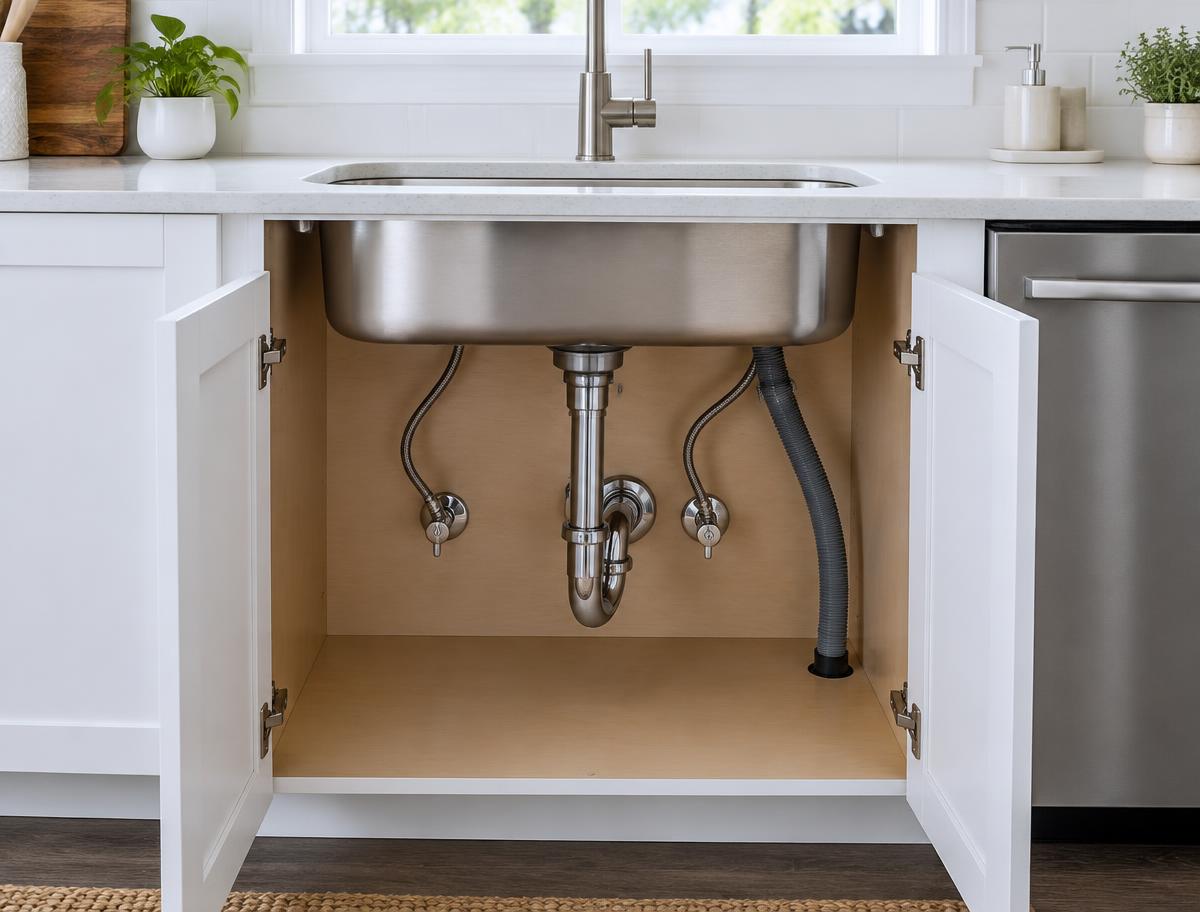
Use the symptoms below to describe the problem. Water under a kitchen sink can come from the faucet, the supply hoses, the basket strainer, the trap, the dishwasher hose or a disposer, so where it first appears matters.
Leak under the kitchen sink
A leak that appears only while water drains usually involves the strainer, trap or tailpiece. A leak with the tap closed suggests a pressurized supply connection or valve. Keep a bowl underneath and note when the drip happens.
Kitchen faucet drips or sprays
A drip from the spout often means a worn cartridge. Water around the base, a leaking pull-down hose or weak spray from the sprayer are different faults. A brand or model photo helps check whether parts are available.
Slow or blocked kitchen drain
Grease, food scraps and coffee grounds build up in kitchen drains. If the sink and dishwasher both back up, the restriction is usually downstream of the trap. Avoid mixing chemical drain products.
Dishwasher will not drain or leaks
A kinked or blocked drain hose, a missing high loop, a new disposer with its knockout plug still in place, or a leaking supply connection can all cause trouble. Water on the floor needs the supply isolated first.
New faucet, sink or appliance
Installing a new faucet, undermount sink, dishwasher or disposer means checking mounting holes, valve condition, drain height and electrical needs. Have the product details ready before booking.
Fridge water line or ice maker
Plastic tubing behind a refrigerator can crack, kink or leak over time. A dedicated shut-off and a braided or copper line are worth discussing, especially after moving the fridge.
Compare your options
Kitchen plumbing jobs and what each one involves
Each kitchen job has its own scope. This table helps you describe the work so the quote includes the right connections, parts and checks.
| Kitchen job | What is usually involved | Worth checking before booking |
|---|---|---|
| Faucet replacement | Remove old faucet, mount new one, connect supply lines, test for leaks | Number of sink holes, deck thickness, condition of shut-off valves |
| Sink replacement | Disconnect and reconnect drain, strainers, trap and supplies | Countertop type, undermount vs drop-in, who handles the counter |
| Dishwasher hookup | Hot-water supply, drain hose with high loop or air gap, leak test | Valve location, drain connection point, electrical supply |
| Garburator install | Mount disposer, connect drain and dishwasher inlet | Electrical outlet or switch, condo or municipal rules, septic system |
| Fridge water line | Run a dedicated line with a shut-off to the fridge | Line route, distance from the sink, filter location |
| Island sink plumbing | Drain, venting and supply routed through the island | Floor access below, venting method, building permit need |
How it works
How a kitchen plumbing job works
- 1
Tell us the job
Describe the leak, blockage or installation, your neighbourhood and any product model numbers. Photos of the sink cabinet help.
- 2
Confirm the scope
We check what the job involves: valves, drain height, connections and whether another trade (counter, electrical) is needed.
- 3
Get a written price
You receive the price before work starts. Ask what parts, labour, disposal and taxes are included.
- 4
Repair or install
The work is completed and every connection is tested under normal use: running water, draining and a dishwasher cycle where relevant.
- 5
Check and clean up
We show you the shut-offs, explain what was done and leave the cabinet dry. Keep the invoice and product manuals together.
Upfront pricing
How much does kitchen plumbing cost in Ottawa?
Kitchen plumbing cost depends on the job, the condition of existing valves and drains, and access under the sink. Replacing a faucet on a sink with working shut-offs is a different scope from moving a sink to a new island. Our Ottawa plumber rates guide lists estimated upper-end ranges for common jobs such as faucet replacement, drain clearing and appliance hookups; your exact price is confirmed in writing before work starts.
Seized or corroded shut-off valves, a trap that does not line up with the new sink, or a drain that needs clearing before a new dishwasher can drain properly all add to the scope. Ask whether replacing old valves is recommended, since a new faucet connected to a failing valve can leak soon after installation.
When comparing quotes, check the service call charge, labour, parts, disposal of the old fixture, taxes and any after-hours charge. If you are renovating, list every kitchen fixture and appliance together so the whole job can be priced at once instead of across several visits.
- Describe the fixture or appliance and model
- Mention old or seized shut-off valves
- Separate drain clearing from installation
- Ask who handles counter cut-outs and wiring
- Clarify disposal, taxes and visit charges
- Price the whole renovation at once
Need a kitchen sink, faucet or dishwasher connected?
Tell us what is happening in your kitchen and request a plumbing quote for your Ottawa home or property.
Local Ottawa plumbers
Kitchen plumbing across Ottawa neighbourhoods
We serve Ottawa, including Kanata, Orléans, Barrhaven, Nepean, Stittsville and Vanier. The age of a home affects what sits behind a kitchen cabinet. Older homes in the Glebe, Centretown, Westboro or Vanier may have galvanized or older copper supply pipes and original drains that were never designed for a dishwasher and disposer. Newer homes in Barrhaven, Kanata or Riverside South usually have PEX supplies and ABS drains, which change how new connections are made.
Many Ottawa kitchen renovations add an island sink. Venting an island drain is more involved than a wall sink, and changes to drain and vent piping can require a City of Ottawa building permit. Ask about permit needs before cabinets and counters are ordered. In Orléans or Vanier, French-language service is available. Rural addresses may involve a small travel fee; ask when booking.
For homes on a septic system in rural Ottawa, discuss a food waste disposer before installing one, because it adds solids to the tank. Condo owners should confirm with management where the unit shut-offs are, whether a water shutdown needs notice and whether garburators are allowed. Landlords can request written job reports.
Kitchen plumbing guide
What to know before booking kitchen plumbing work
These checks help you describe the problem, buy compatible products and understand the proposed work. They are not instructions to dismantle supply lines or keep using a leaking connection.
Find where the kitchen leak starts
Clear the cabinet under the sink and dry everything with a towel. Then run the tap with the drain closed, open the drain, and finally leave everything off. A drip that appears only when water drains points to the basket strainer, tailpiece or trap. A drip with the tap closed points to a supply hose, valve or the faucet itself. Water that appears during a dishwasher cycle points to the dishwasher hose or its connection.
Tell us what you saw at each stage. That one observation often saves time during the visit. If water is spraying or the cabinet floor is soaked, close the shut-offs under the sink if they turn freely, or close the main shut-off. Do not force a seized valve; old multi-turn valves can break when forced.
Repair or replace a kitchen faucet
Many kitchen faucets can be repaired with a cartridge, O-rings or a new pull-down hose. Repair makes sense when the faucet body is sound and parts are available for the model. Replacement makes sense when the body is corroded, the finish has failed, parts are discontinued or you want a different style or function.
Before buying a new faucet, count the holes in the sink or counter, check whether you need a deck plate, and measure the clearance to the window or cabinets above. Pull-down faucets need room under the sink for the hose and its weight. Touchless faucets need a power source or batteries. The EPA WaterSense resources below explain how to compare faucet water use.
Kitchen drains: grease, scraps and shared lines
Grease poured down a kitchen sink cools and sticks to the inside of the drain, catching food scraps and coffee grounds until water slows. The City of Ottawa asks residents to keep fats, oils and grease out of drains for this reason. Wipe greasy pans into the green bin and use a strainer in the sink.
If only the kitchen sink is slow, the restriction is usually in the trap or the branch drain behind the wall. If the kitchen sink, dishwasher and nearby fixtures all slow down, the problem may be farther along the main drain. Mention every affected fixture so the right drain clearing method is planned.
Dishwasher plumbing: supply, drain and high loop
A dishwasher needs a hot-water supply with its own accessible shut-off, a drain connection and power. The drain hose is normally routed up to the underside of the counter, called a high loop, or through an air gap device, before connecting to the sink tailpiece or disposer. This helps keep dirty sink water from flowing back into the dishwasher.
When a dishwasher will not drain, check the filter first, then look for a kinked hose. If a new disposer was just installed, the plastic knockout plug in its dishwasher inlet may still be in place. Leaks at the front of the dishwasher are often door seals or leveling, while leaks underneath can involve the supply or drain connections and need the water shut off.
Garburators and food waste disposers
A food waste disposer mounts under the sink and connects to the drain. Installing one involves the mounting assembly, drain alignment, the dishwasher inlet and electrical supply, which may be an outlet or a hard-wired switch. Electrical work beyond plugging into an existing outlet may require a licensed electrician.
A disposer does not make a drain grease-proof. Run cold water while using it and avoid fibrous scraps, bones and large amounts of starchy food. On a private septic system, a disposer adds solids to the tank and can mean more frequent pumping; ask about it before installing. Condo owners should check building rules first.
Refrigerator water lines and ice makers
Fridge ice makers and water dispensers need a cold-water supply. Older installations often used thin plastic tubing connected with a saddle valve clamped onto a pipe. These can crack or leak, sometimes behind the fridge where no one sees the water until the floor is damaged.
A dedicated shut-off valve and a braided stainless or copper line are worth discussing, especially when moving or replacing a fridge. Leave enough line to pull the fridge out without stress on the connection. If the fridge has a filter, replace it on the maker's schedule; a clogged filter can reduce flow and look like a plumbing fault.
Replacing a kitchen sink
A sink replacement disconnects and reconnects the drain, strainers, trap, supplies and any dishwasher or disposer connections. Undermount sinks are attached to the underside of stone or solid-surface counters and are usually installed or reset with the countertop. Drop-in sinks sit on top of the counter and can often be replaced alone if the new sink fits the existing cut-out.
Measure the cabinet width and the existing cut-out before buying. A deeper bowl can put the drain outlet lower than the existing wall drain, which may require adjusting the trap arm. Single and double bowls connect differently. Ask who handles the counter, the plumbing and any electrical work before the old sink comes out.
Island sinks and kitchen layout changes
Moving a sink to an island is one of the most involved kitchen plumbing jobs. The drain needs a proper slope, and because there is no wall above the sink, venting is handled differently, for example with a loop vent or another method allowed for that situation. Supply lines and the drain usually run through the floor below.
Access from a basement makes island plumbing far easier than a slab or finished ceiling. Changes to drain and vent piping can require a building permit under the Ontario Building Code and City of Ottawa process. Plan plumbing before ordering cabinets so the island layout leaves room for the drain, trap and dishwasher.
Shut-off valves under the sink
Every kitchen sink should have accessible shut-off valves for hot and cold water. Older multi-turn valves can seize or leak when finally used. When a faucet or sink is replaced, it is often sensible to replace these valves too, so you can isolate the kitchen in a future leak without shutting off the whole house.
Know where your main water shut-off is as well, usually near the water meter in the basement. Test it gently once a year. If it does not close fully, mention it at your next plumbing visit, because a working main shut-off is the most important tool during any kitchen leak.
Water quality at the kitchen tap
Ottawa's municipal water is treated and tested by the City. Some homeowners still add an under-sink filter or reverse osmosis system for taste, and homes on private wells may need testing and treatment. A filter at the kitchen sink needs space under the cabinet, a supply connection and, for reverse osmosis, a drain connection.
If your home may have lead service pipes, which can be found in some Ottawa homes built before the mid-1950s, follow Health Canada and City of Ottawa advice and run the cold tap before drinking after water has been sitting. A filter is not a replacement for addressing lead piping. Our water treatment page covers testing and filtration options.
Kitchen renovations, condos and rentals
During a renovation, plan the plumbing before cabinets arrive: sink location, dishwasher position, fridge line route and any island. Ask your contractor which trade handles each connection. A short plumbing visit before cabinets go in can prevent cutting into new cabinetry later.
Condo owners should check with management before planned work that needs a water shutdown, and confirm whether disposers are allowed. Tenants should notify the landlord about leaks and get approval before non-emergency work. Landlords can request written job reports describing the problem and the completed work.
Prepare for the visit and check the result
Empty the cabinet under the sink, move items off the counter near the faucet and have product boxes and manuals ready for any new faucet, sink, dishwasher or disposer. Tell us about chemical drain products already used. Make sure the area is lit and pets are elsewhere.
After the work, run hot and cold water, fill and drain the sink, and run a short dishwasher cycle if one was connected. Check the cabinet for drips over the next day. Ask what was replaced and which parts or workmanship terms apply, and keep the invoice with your product manuals.
Explore our Ottawa plumbing network
Plumbing services
- Emergency Plumber Ottawa
- Weekend & Same-Day Plumber
- Plumbing Repairs Ottawa
- Pipe Repair & Replacement Ottawa
- Faucet Repair & Installation Ottawa
- Water Leak Detection Ottawa
- Toilet & Bathroom Fixture Repair
- Drain Cleaning Ottawa
- Sewer Line Repair Ottawa
- Water Heater Repair Ottawa
- Tankless Water Heater Ottawa
- Plumbing & Heating Ottawa
- Frozen Pipe Repair Ottawa
- Sump Pump Installation Ottawa
- Backwater Valve Installation Ottawa
- Residential Plumber Ottawa
- Commercial Plumber Ottawa
- Plumbing Inspection Ottawa
- Water Softeners & Filtration Ottawa
- Ottawa Plumber Rates & Costs
- Plombier Ottawa (français)
- All Plumbing Services
FAQ
Kitchen plumbing questions
Straight answers from our licensed plumbers. Still have a question? Call us — real people answer.
Contact us
Request kitchen plumbing service in Ottawa
Send the details and a licensed plumber will call you back with honest advice and a clear, upfront price. For active leaks or no water, call us right away.

Request service or a free quote
Average callback time: under 15 minutes during business hours.