Faucet repair Ottawa
Faucet Repair & Installation in Ottawa — Kitchen, Bath & Shower
A dripping tap wastes water, a stiff handle gets worse with time, and a slow leak under the sink can damage cabinets before anyone notices. Plumber Ottawa helps with kitchen, bathroom and shower faucet repairs and replacements—explaining whether a cartridge, valve or supply line is the cause before recommending a new fixture.
- Dripping and leaking faucet repairs
- Cartridge, stem and seal replacement
- Kitchen, bathroom and shower faucets
- Seized shut-off valves and supply lines
Get a fast plumbing quote
Tell us what's wrong — we'll call you back in minutes.
- Licensed & insured
- Upfront flat-rate pricing
- Workmanship guarantee
- Clean, respectful techs
- Same-day service
Quick answer
Should I repair or replace a dripping faucet?
Many drips come from a worn cartridge, washer or seal that can be replaced if parts are available for that faucet. Replacement makes more sense when the body is corroded or cracked, parts are discontinued, multiple components are failing or you want a different style or function. The brand, model and age matter more than the symptom alone. If water is leaking under the sink, close the fixture's shut-off valves if they turn easily and put a container under the leak.
What we fix
Common faucet problems in Ottawa homes
Where the water appears tells a lot about the cause. Note whether it drips from the spout, leaks around the handle or base, or appears underneath the sink, and whether it affects hot, cold or both.
Dripping from the spout
A steady drip with the handle off usually points to a worn cartridge, washer or valve seat. Single-handle faucets typically use a cartridge; older two-handle designs may use stems and washers.
Leaking around the handle
Water seeping at the handle often indicates worn O-rings or a failing cartridge seal. Continued use can push water into the faucet body or deck. Note the brand if visible on the faucet.
Water under the sink
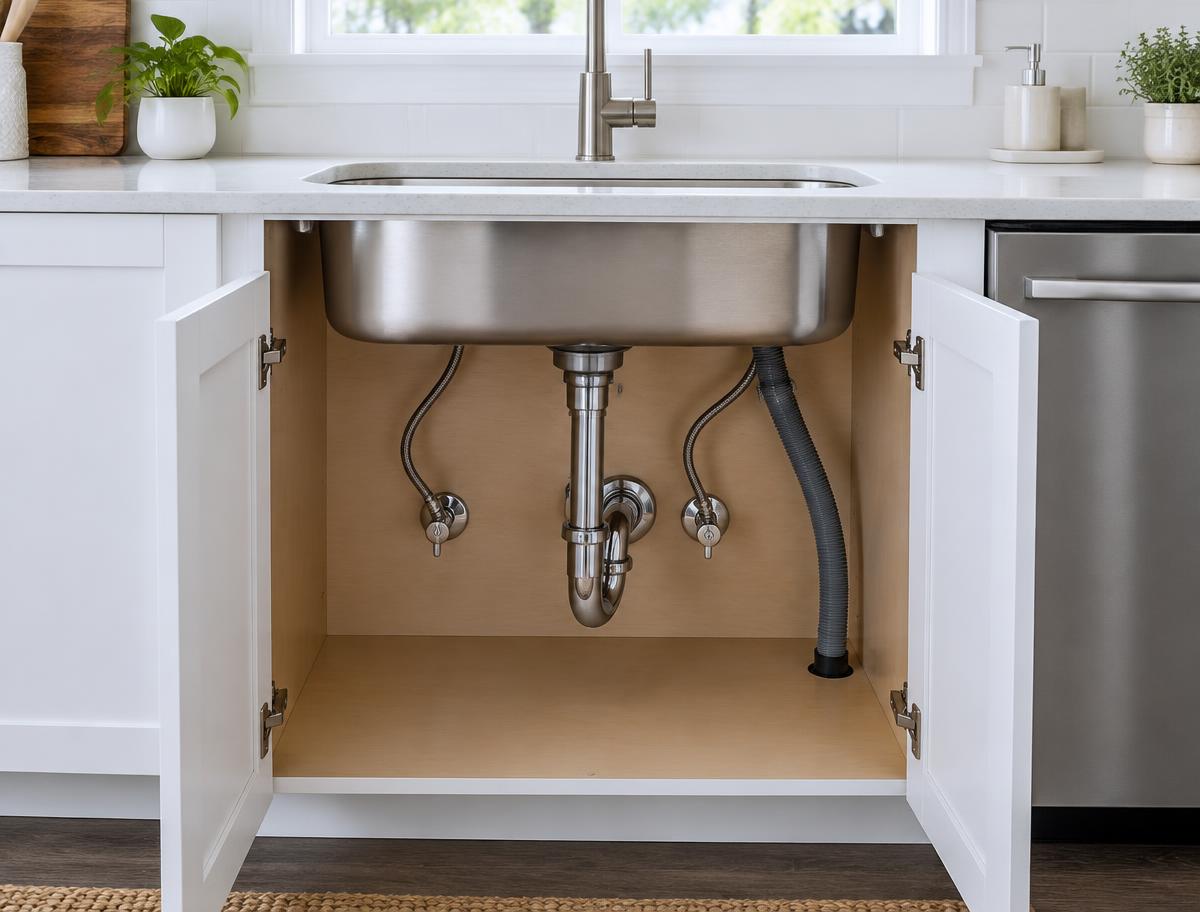
Leaks under the sink may come from supply lines, connections, the faucet base or the drain. Dry the area, then check where moisture reappears first. Swollen cabinet bottoms suggest a leak has run for a while.
Low flow from one faucet
If only one faucet has weak flow, a clogged aerator or cartridge debris is common. If every fixture is weak, the cause is more likely in the supply. Tell us which fixtures are affected.
Stiff or loose handles
Mineral buildup, worn cartridges or loose fasteners can make handles hard to turn or wobbly. Forcing a stiff handle can break parts, so it is better to have it checked.
Shut-off valve will not close
Fixture stop valves that have not been turned for years can seize or leak when moved. A faucet replacement often includes evaluating or replacing these valves so future repairs are easier.
Compare your options
Faucet types and what repairs usually involve
Faucet design determines which parts wear and how they are replaced. This overview is general; the specific brand and model determine part availability.
| Faucet design | Common wear parts | What to clarify |
|---|---|---|
| Single-handle cartridge | Cartridge, O-rings | Brand, model and genuine replacement cartridge |
| Two-handle compression | Washers, stems, valve seats | Seat condition and whether stems are still available |
| Ball-type | Ball, seals and springs | Repair kit availability for the model |
| Ceramic disc | Disc cartridge and seals | Debris or wear on the disc surfaces |
| Pull-down kitchen | Hose, spray head, weight, cartridge | Hose and head compatibility with the faucet body |
| Shower and tub valve | Cartridge, pressure-balance spool, diverter | Wall access, trim kit compatibility and shut-off location |
How it works
How a faucet repair visit works
- 1
Share the symptom and brand
Tell us where it leaks and, if possible, the brand or a photo of the faucet, handle and under-sink connections.
- 2
Isolate and inspect
Water is shut off at the fixture or main, the faucet is opened and the failed part and condition of the body are checked.
- 3
Repair or replacement options
You are told whether a part repair is practical, what it involves, and when replacement is the more sensible choice.
- 4
Complete and test
The repair or new faucet is installed, connections checked for leaks under pressure and hot and cold operation confirmed.
- 5
Advice and records
Ask about aerator cleaning, shut-off condition and the parts used, so future repairs are straightforward.
Upfront pricing
How much does faucet repair cost in Ottawa?
Faucet repair cost depends on the faucet design, part availability, access under the sink and whether shut-off valves or supply lines also need replacing. Replacing a cartridge in a common faucet is a smaller job than freeing a seized shower valve behind tile. No verified faucet-repair prices are published on this page; ask for the visit charge and a quote once the faucet is identified.
For replacements, clarify whether you are supplying the faucet or the plumber is. Customer-supplied fixtures should be checked for completeness and compatibility before the visit. Ask whether removal of the old faucet, new supply lines, new shut-off valves and disposal are included. Countertop drilling for a different hole configuration may be separate.
Shower valve work can involve wall access if the valve body must be replaced; trim-only replacements are simpler where the existing valve is compatible. See our Ottawa plumber rates guide for general labour and visit-cost context. A possible small travel fee applies to rural addresses.
- Faucet design and brand
- Part availability
- Under-sink access
- Shut-off valve and supply line condition
- Customer- or plumber-supplied fixture
- Wall access for shower valves
Stop the drip—get your faucet fixed
Send the faucet type and where it leaks. We'll explain whether a repair or replacement makes sense.
Local Ottawa plumbers
Faucet repair enquiries across Ottawa
We receive faucet repair and installation enquiries from across Ottawa, including Kanata, Nepean, Barrhaven, Orléans, Westboro, Gloucester and Vanier. Faucets in a home may range from original builder fixtures to recent renovations, so the brand and age matter more than the neighbourhood.
In older central homes such as those in the Glebe, Sandy Hill and Westboro, shut-off valves under sinks may be absent or seized, and some bathtub and shower valves are older two- or three-handle designs. In newer homes across Kanata, Barrhaven and Riverside South, cartridge faucets are more common and parts are often still available.
Ottawa's municipal water is generally soft, but homes on private wells—common around Manotick, Cumberland and Greely—may see more mineral buildup on aerators and cartridges. Tell us if your home uses well water or a treatment system. French-language service is available in Orléans and Vanier, and landlords can request written job reports.
Ottawa faucet repair guide
Diagnose a faucet problem and choose the right fix
Faucets are among the most used fixtures in a home, so wear is normal. This guide helps you describe the problem, understand the options and avoid damaging the faucet or the cabinet below.
Why a small drip matters
A drip that seems insignificant runs every hour of every day. The U.S. EPA's WaterSense program notes that household leaks, including dripping faucets, can waste a meaningful amount of water over a year. On a metered Ottawa water account, that waste shows up on the bill.
A drip also indicates wear that tends to worsen. A cartridge or washer that starts dripping can progress to a steady stream or a handle that will not fully close. Addressing it early is usually simpler and less expensive than waiting for it to fail completely.
Identify your faucet type
Single-handle faucets controlling both temperature and flow usually use a cartridge or ceramic disc. Two-handle faucets may use compression stems with rubber washers, or ceramic cartridges. Ball-type faucets, common in older single-handle kitchen models, use a rotating ball with seals and springs.
The brand name is often on the handle, spout or escutcheon. Model information may be on the original box, receipt or a tag on the supply lines. A photo of the faucet and the under-sink connections helps a plumber bring the right parts, which can avoid a second visit.
Cartridge and washer repairs
Replacing a cartridge involves shutting off water, removing the handle and retaining hardware, extracting the old cartridge and fitting a compatible new one. Using the correct genuine or equivalent part matters: an ill-fitting cartridge may leak or restrict flow.
Compression faucets with washers can often be repaired by replacing the washer and, if worn, resurfacing or replacing the valve seat. If the seat is badly damaged and cannot be replaced, the faucet may continue to drip regardless of new washers, which is when replacement becomes sensible.
When replacement is the better choice
Replacement makes sense when the faucet body is corroded or cracked, parts are discontinued, multiple components have failed, or a repair would cost close to a new fixture. It is also an opportunity to choose features such as a pull-down sprayer or a lower-flow WaterSense-labelled model.
Before buying, check the number of holes in the sink or countertop and their spacing, the sink deck thickness and the space below the sink. A faucet that needs a different hole configuration may require a deck plate or drilling. Ask your plumber to confirm compatibility before purchase.
Leaks under the sink
Under-sink leaks can come from the supply lines, the shut-off valves, the faucet base or the drain trap. Dry everything with a towel, put paper towel on the cabinet floor, then run the faucet and watch where water appears first. Note whether it leaks when the faucet is on or all the time.
Constant leaks with the faucet off usually involve the pressurized supply side. Leaks that appear only while water drains point to the drain connections or trap. Braided supply lines have a service life; if yours are old, bulging or corroded at the fittings, replacing them is often recommended.
Shut-off valves that will not work
Fixture shut-off valves allow a faucet to be serviced without turning off water to the whole house. Valves that have not moved for years can seize or begin leaking at the stem when finally turned. Forcing them can break them, which is why many plumbers check or replace them during a faucet job.
Replacing old multi-turn valves with quarter-turn valves makes future repairs easier. If your home has no shut-offs under the sinks, adding them is a worthwhile improvement during a faucet replacement.
Low flow from a faucet
When only one faucet has weak flow, the aerator at the spout tip is the most common cause. It can collect debris or mineral deposits, especially after water main work in the area. Unscrewing and cleaning it often restores flow.
If cleaning the aerator does not help, debris in the cartridge or a partly closed or failing shut-off valve may be the cause. If several fixtures are weak at once, the issue is more likely in the supply piping or pressure; see our pipe repair page for that type of problem.
Shower and tub faucet repairs
Shower valves are installed inside the wall, and repairs usually happen through the trim opening. Many modern valves use a pressure-balancing or thermostatic cartridge that helps limit sudden temperature changes. A worn cartridge can cause drips, temperature fluctuations or difficulty adjusting.
Replacing a valve body, rather than the cartridge, can require opening the wall from behind or around the trim. If you are planning a bathroom renovation, consider replacing older shower valves at that time. Ask about anti-scald protection and whether trim kits are compatible with the valve you have.
Kitchen pull-down and pull-out faucets
Pull-down faucets include a hose, spray head and counterweight. Leaks can occur at the hose connection, the spray head or the hose itself, and the spray head can lose function due to mineral buildup. Many of these parts are replaceable separately if they are compatible with the faucet body.
If the hose does not retract smoothly, the counterweight may have moved or the hose may be catching on items stored under the sink. These are often simple adjustments. Our kitchen plumbing page covers sinks, dishwashers and disposers in more detail.
Outdoor faucets and hose bibs
Outdoor faucets, often called hose bibs or sillcocks, are vulnerable to Ottawa freezing. A frost-free hose bib places the valve inside the warm wall, but it can still freeze and split if a hose is left connected in winter. A burst inside the wall may not leak until the faucet is used in spring.
Disconnect hoses in fall, and close and drain any interior shut-off to standard outdoor faucets. The City of Ottawa's freezing advisory offers additional winter protection guidance. If an outdoor faucet leaks inside when first used in spring, stop using it and request a repair.
What to prepare before a faucet visit
Take photos of the faucet, handle, spout and underneath the sink showing the supply lines and shut-offs. Note the brand if visible and whether the problem affects hot, cold or both. Clear the cabinet below the sink so the plumber has room to work.
If you are supplying a new faucet, have it on site and check the box contents beforehand. Mention any countertop material such as stone or quartz, since that affects removing old fixtures and any drilling.
Explore our Ottawa plumbing network
Plumbing services
- Emergency Plumber Ottawa
- Weekend & Same-Day Plumber
- Plumbing Repairs Ottawa
- Pipe Repair & Replacement Ottawa
- Water Leak Detection Ottawa
- Toilet & Bathroom Fixture Repair
- Kitchen Plumbing & Dishwashers
- Drain Cleaning Ottawa
- Sewer Line Repair Ottawa
- Water Heater Repair Ottawa
- Tankless Water Heater Ottawa
- Plumbing & Heating Ottawa
- Frozen Pipe Repair Ottawa
- Sump Pump Installation Ottawa
- Backwater Valve Installation Ottawa
- Residential Plumber Ottawa
- Commercial Plumber Ottawa
- Plumbing Inspection Ottawa
- Water Softeners & Filtration Ottawa
- Ottawa Plumber Rates & Costs
- Plombier Ottawa (français)
- All Plumbing Services
FAQ
Faucet repair questions in Ottawa
Straight answers from our licensed plumbers. Still have a question? Call us — real people answer.
Contact us
Request a faucet repair in Ottawa
Send the details and a licensed plumber will call you back with honest advice and a clear, upfront price. For active leaks or no water, call us right away.

Request service or a free quote
Average callback time: under 15 minutes during business hours.